
🫖 Case Debriefing: A Southern Belle’s Descent Into Darkness
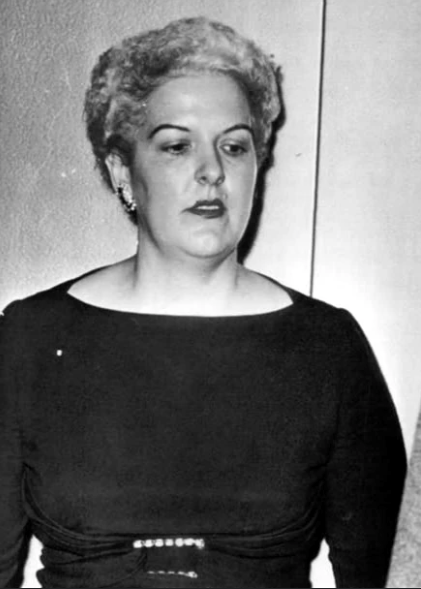
In 1950s Macon, Georgia, there was no place more alive than Anjette’s Restaurant. The food? Good enough—hearty Southern cuisine filled with flavors that lingered on the palate long after the last bite. But the true draw?
Anjette Lyles—an attractive blonde in her blue satin dress and crinoline petticoat, striding confidently across the black-and-white tile floors, her laughter ringing out like music as she effortlessly engaged with her patrons, calling out:
“Y’all ready for some more sweet tea?”
The bustling atmosphere was infectious, filled with the chatter of families and friends gathered around tables piled high with food, all under the warm glow of hanging lights that danced off the walls adorned with cheerful artwork. The smell of fried chicken and biscuits wafted through the air, enticing newcomers to step inside and experience the charm and excitement that made Anjette’s the heart of the community.
“Hey Betty Anne, gimme some sugar. And Paul, don’t you look just as handsome as you wanna be?”
She was vibrant, successful, a self-made woman driving a flashy Cadillac and running the most beloved eatery in town. Anjette Lyles not only had her fingers on the pulse of the community but also paraded through life with an infectious energy that brought everyone together. She hugged everyone, flirted at every table, and whispered the juiciest gossip, making each patron feel like they were the only one that mattered in her presence. With her warm smile and unforgettable charm, it was no wonder that the whole town adored her.
Her restaurant was more than just a place to eat; it was a gathering spot, a stage for laughter, and a home to an array of local characters who dropped by to share stories over a hot meal. In the culinary world of Macon, Anjette had carved a niche, serving not only delightful dishes but also a healthy dose of camaraderie and community spirit.
Which is why in May of 1958, Macon was stunned into silence when news broke:
Anjette Lyles had been arrested for murder. The shocking revelation shattered the serene façade that wrapped the small town. People whispered in disbelief, struggling to reconcile the vivacious woman they knew with the grave accusations that were being hurled her way. The streets that once echoed with laughter and gossip now buzzed with tension, as questions loomed larger than ever. How could someone so beloved, who brought so much joy, find themselves at the center of such a dark scandal? The town held its breath, eager to uncover the truth behind this unexpected saga.
And not just one. She was accused of poisoning four of her closest relatives:
- Her first husband, Ben Lyles, in 1952
- Her second husband, Buddy Gabbert, in 1955
- Her mother-in-law, Julia Lyles, in 1957
- And most horrifying of all—her 9-year-old daughter, Marcia Gabbert, in 1958

☠️ The Victims: Pattern, Poison, and Profit
The deaths followed a chilling pattern:
- All were close to Anjette.
- All suffered agonizing, extended illnesses.
- All died of arsenic poisoning—delivered in repeated doses until lethal levels were reached.
- And in every case, Anjette was the caregiver, the comforter, the provider of food and drink… and the beneficiary of insurance payouts.
The poison was eventually traced to arsenic trioxide—ant poison—found hidden in Anjette’s bedroom. This discovery raised numerous questions regarding her intentions and the extent of her deception. Hospital employees and restaurant staff testified that Anjette would often disappear into a restroom with both her purse and the victim’s food or drink, a suspicious behavior that did not go unnoticed. Witnesses recounted how she seemed to meticulously plan these moments, ensuring that she always returned just before serving the tainted dishes.
During the investigation, it became evident that her actions were not isolated incidents. Anjette’s pattern of behavior suggested a calculated approach to her crimes, as she repeatedly took advantage of opportunities to poison her unsuspecting victims. The combination of her consistent retreat to the restroom, along with the timing of her returns, painted a disturbing picture of premeditated malice. Each trip seemed to serve a dual purpose: a chance to create distance between herself and the act, and the crucial moment to infuse the food or drink with the deadly substance. The testimonies painted a chilling portrait of a woman who was willing to go to great lengths to achieve her sinister objectives.
👻 Voodoo & Black Candles ?!
But the case wasn’t just shocking because of the bodies discovered in the unthinkable location; it was sensational because of what else investigators found during their meticulous examination of the scene. They uncovered a tangled web of clues that hinted at a far more complex story, revealing hidden connections among the victims, potential motives that transcended mere crime, and evidence suggesting that this was only the tip of the iceberg. The community was left in a state of disbelief as details began to emerge, shedding light on a troubling narrative that would capture headlines for weeks to come.
Anjette was deeply superstitious, known to practice voodoo and folk magic. She burned candles in different colors:
- White for peace
- Green for luck
- Red for love
- Black… when she wanted someone to die
She spoke to the candles, made offerings, carried powders, and visited root workers. Each ritual was imbued with meaning, forming a tapestry of beliefs that she held dear. She even attributed her restaurant’s success to her magical practices, boasting to patrons that she used charms and spells to grow her business. This blend of culinary art and mystical tradition created an atmosphere infused with her unique brand of enchantment, captivating the diners who came to experience more than just a meal; they sought the extraordinary.
At the hospital, Anjette reportedly laughed as her daughter Marcia hallucinated in terror, seeing snakes and bugs crawling from her fingers, the invasive visions twisting her reality into something unrecognizable. The shrieks of her child filled the sterile room, yet Anjette’s laughter echoed bizarrely amidst the chaos, a chilling juxtaposition that left onlookers uneasy. Before the doctors declared the girl critical, Anjette had already packed her belongings and ordered a coffin, seemingly detached from the dire situation. Her preparation hinted at a predetermined detachment, a belief that perhaps fate would play its hand, leading her to the path she had long envisioned. In that moment, the boundary between nurturing and neglect blurred dangerously, leaving a haunting question lingering in the air: what price would one pay for their convictions?
“She’ll soon be going home to her father and grandmother,” she was overheard saying.
⚖️ The Trial: Burn the Witch
An anonymous letter from a restaurant employee tipped off authorities, leading to an investigation that uncovered dark secrets. Marcia’s body was tested and found to be saturated with arsenic, raising grave concerns about the circumstances surrounding her untimely death.
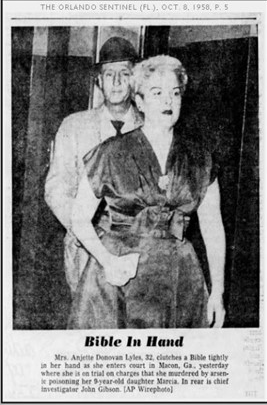
Though she was charged with just one murder—Marcia’s—the court allowed the prosecution to introduce evidence from all four deaths that had occurred in Anjette’s care, painting a disturbing picture of a pattern of malice.
In October 1958, Anjette’s trial gripped the nation. Spectators lined up for hours just to watch the proceedings, each person eager to witness the unfolding drama that seemed almost too bizarre to be real. News reports spoke of voodoo, spells, séances, and poison, weaving a narrative that captivated the public’s imagination and intensified the media frenzy surrounding the case. The courtroom became a stage for sensational arguments, as lawyers presented chilling testimonies and dramatic evidence of the alleged crimes.
Signs appeared outside the courthouse reading: “Justice for Marcia!” and “Stop the Poisoner!” In the frenzy of public interest, local businesses saw a spike in activity, as people flocked to the area to catch a glimpse of the spectacle. The trial not only revealed the complexities of Anjette’s life but also served as a dark reflection of society’s fascination with the macabre and the unknown.
“Burn the Witch!”
The testimony painted a damning portrait:
- She had threatened her daughter repeatedly: “I’ll kill you one day, Marcia!”
- She faked Julia’s will to inherit her assets.
- She laughed about insurance money after each death.
- She kept a calm, icy demeanor as people sobbed in court describing Marcia’s horrific end.
👩⚖️ Verdict and Fate: The Woman Who Escaped the Chair
The jury took 90 minutes to deliberate, reflecting the complexity of the case and the weight of the verdict they were tasked with delivering. The judge took three times as long in consideration, weighing the implications of the sentence that would follow, deliberating not only the life of Anjette Lyles but also the broader societal consequences of the judicial system.
Anjette Lyles was sentenced to death by electric chair, a decision that sent shockwaves through the community and ignited debates about mental health and capital punishment. However, the narrative took an unexpected turn—a twist that would alter her fate dramatically.
Following the trial, doctors conducted a thorough examination and diagnosed her with chronic paranoid schizophrenia. This revelation brought to light the complexities of her mental state, as medical professionals reported instances of hallucinations, delusions, and psychosis that altered her perception of reality. In light of this diagnosis, she was committed to Central State Hospital in Milledgeville, subsequently spared from execution. However, the conditions of her commitment were stark: if she were ever to regain her mental faculties, she would face the death penalty once more.

Inside the institution, reports emerged that she was regarded as surprisingly cheerful. Lyles engaged with other patients by reading fortunes, captivating them with her tales, while also conducting informal teachings on candles, powders, and various forms of magic. This engagement not only provided her with a sense of purpose but also highlighted the often-overlooked human capacity for hope and resilience even in the most challenging circumstances. Her life inside the hospital became a complex interplay of illness, creativity, and the pursuit of understanding among her peers, casting a shadow on the notion of punishment and rehabilitation within the mental health system.
“They think I’m crazy as hell, and I’m gonna let them keep thinking it,” she said.
“Because if they don’t… they’re gonna fry my ass!”
Anjette Lyles died there in 1977, age 52. She never stood trial for the other murders, which cast a long shadow over the investigations and left many questions unanswered. By the time of her death, her life had become a reflection of both tragedy and intrigue, as her past actions led to a multitude of rumors and speculations regarding her involvement in various criminal activities. Despite the efforts of law enforcement officials to piece together the full extent of her alleged crimes, the absence of a trial meant that justice remained elusive for the victims and their families. It was a case that garnered significant media attention, maintaining public interest long after she passed away, as new evidence and theories continued to surface in the years that followed.
🧩 Case Summary: Legend or Lunatic?
The story of Anjette Lyles remains a haunting Southern gothic blend of:
- Sweet tea and poison
- Hugs and hexes
- Fried bacon balls and funeral plans
Her story is still debated today:
- Was she mentally ill and delusional, driven by hallucinations and superstition?
- Or was she a calculated, cold-blooded serial killer—smart enough to manipulate an entire town?
What’s certain is this: four people died, all while in Anjette’s care. And she profited from every one. It is a chilling realization that the warmth she displayed to her patrons was juxtaposed with actions far darker. The diner, a place where people came seeking comfort, food, and connection, became a backdrop to a series of tragic events that raised numerous questions.
The same hands that hugged every patron at the diner… may have stirred poison into lemonade. Those seemingly gentle gestures, an outward expression of hospitality, now cast a long shadow over the lives lost. Each death was not just a statistic; it represented a story, a family shattered, a community left grappling with the aftermath. How could the person trusted to provide nourishment and solace have turned into a source of such profound harm?
As patrons enjoyed meals prepared and served with care, Anjette’s motivations and actions remained hidden beneath a facade of normalcy. It invites reflection on the complexities of human nature and the disturbing possibility that appearances can be deceiving. What drives a person to such extremes? The laughter and chatter that once filled the diner became echoes of sorrow, as those left behind struggled to comprehend how love could mask malice so seamlessly.
🔮 Final Thoughts: Witch, Killer, or Both?
Anjette Lyles was not your typical killer.
She was beautiful, beloved, respected. Family and friends admired her, engrossed by her charm and charisma. Yet beneath her polished exterior lay a darker truth: she was unrepentant, manipulative, and eerily calm as her daughter died screaming. In chilling contrast to the tenderness expected of a mother, she wore satin and pearls, embodying the image of grace while lighting black candles for death—a stark juxtaposition that left onlookers questioning the facade she maintained.
Is she proof that evil wears a friendly face? This notion troubles the very fabric of human understanding, as we grapple with the unsettling realization that those who commit heinous acts can be enveloped in an aura of normalcy. Anjette’s case challenges our perceptions of morality, pushing us to confront the complexities of human nature.
Or was she a victim too—of untreated mental illness and societal denial? The narrative surrounding her actions forces us to reflect on the environments that foster such dark inclinations. It compels us to ponder the societal structures that often overlook the signs of mental distress, leaving individuals to navigate their demons alone.
In dissecting Anjette’s life, we are faced with a paradox: can one be a product of their circumstances while simultaneously embodying the essence of malevolence? The story of Anjette Lyles serves as a haunting reminder that behind the smiles and social grace may lurk profound turbulence, challenging us to seek understanding in the face of incomprehensible actions.
🕯️ What do you think?
Could someone like Anjette exist today? In our rapidly evolving society, the court system—or public opinion—might treat her quite differently, influenced by advances in psychology and the prevalence of social media. We live in an era where information spreads like wildfire, shaping perceptions and judgments almost instantaneously. Would the judicial process be swayed by the intense scrutiny of public opinion, or would it maintain its integrity in the face of overwhelming social pressure? Moreover, do you genuinely believe in coincidence… or in the black candle? In this context, one must ponder whether fate plays a role in our lives or if chance merely guides our paths without intention. Such questions provoke deeper reflections on morality, justice, and the unseen forces that may govern our existence, leaving us to wonder about the true nature of destiny and the complexities of human behavior.
Let me know in the comments or on the Tea & Mystery Facebook group. Until next time, keep your teacups full and your intuition sharper than ever.
Much love and many blessings,
Mrs. B 🖤
Discover more from LunaOwl : The Unconventional Momma
Subscribe to get the latest posts sent to your email.
