
This is my soap box time — and I am yelling this from the rooftops:
It is high time that certain stigmas and misconceptions be pushed aside when it comes to ADHD. If someone has a diagnosis, it needs to be taken seriously — no more eye rolls, no more “everyone has a little ADHD,” no more invalidation.
We STRUGGLE just as much as other people who are disabled.
Our lives are impacted in deep, often invisible ways. And just because it doesn’t always look like a traditional disability to others doesn’t mean we aren’t fighting through it every single day. ADHD deserves the same recognition, the same respect, and the same support that any other disability receives.
Let’s talk about something that weighs heavy on many of us in the neurodivergent community — especially those of us with ADHD.
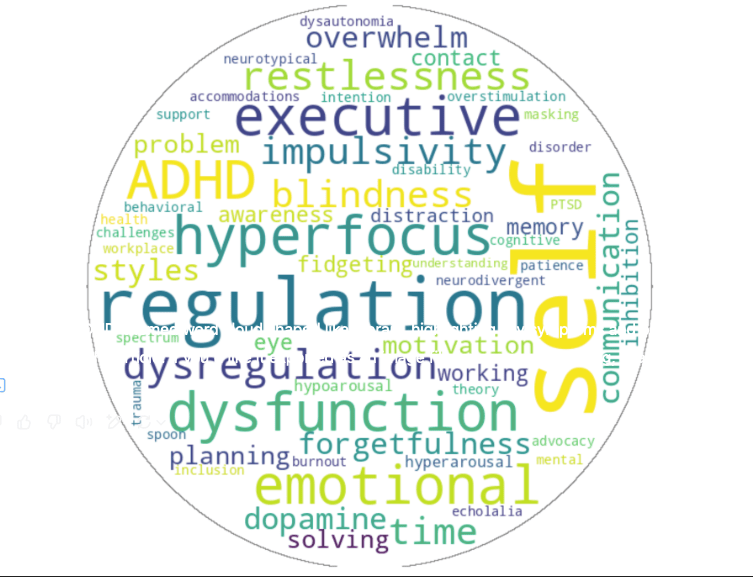
ADHD is a disability.
It doesn’t always look like one to others. It’s often masked, misunderstood, or dismissed as “just being hyper” or “bad at focusing.” But let me be very clear: ADHD impacts nearly every aspect of daily life — from time management, emotional regulation, executive function, and memory, to relationships, work, and even our ability to sleep. It’s not just being forgetful. It’s not just procrastinating. And it’s definitely not just needing a planner or drinking more water.
What’s even more frustrating is that, while ADHD and Autism share quite a bit of overlap — from sensory sensitivities to social misunderstandings to needing structure — there’s still a wide chasm when it comes to how we are treated, diagnosed, and accommodated. This discrepancy can lead to significant challenges for individuals who navigate these conditions, as the societal perception often favors one over the other.
For instance, those with ADHD may be seen as simply lacking discipline or focus, while individuals with Autism might be labeled as socially awkward or introverted. This not only affects the support systems available but also influences the educational and professional opportunities afforded to each group. Consequently, it becomes imperative to foster a greater understanding of the unique needs and experiences that both communities face, ensuring that all individuals receive equitable access to resources and compassionate care.
Let me pause right here and say this clearly:
Many people are both Autistic and ADHD — what we call AuDHD — and this post is not about discrediting or minimizing that lived experience. In fact, those folks often face a whole extra set of challenges navigating a world that isn’t built for them either. I see you. I honor you. This post isn’t about comparison or competition. It’s about awareness and justice.
What breaks my heart is that, in many institutions — whether it’s schools, workplaces, or government support systems — someone with Autism is often more likely to receive accommodations and understanding than someone with severe ADHD. Why? Because Autism is more widely recognized as a disability.
ADHD? We’re still fighting to prove we’re not just lazy or careless.
What’s often missed in this conversation is just how many symptoms of ADHD mirror or overlap with those seen in Autism.
Things like:
- Dysautonomia (issues with regulating internal systems — heart rate, blood pressure, temperature)- Not all cases but a lot of us do have this issue.
- Echolalia (repeating words or phrases, often for processing or comfort) – Can be a form of stimming for many of us, providing a sense of security and familiarity in various situations, while also serving as a tool for communication and expression when verbal skills may be challenged.
- Overstimulation (from lights, sounds, textures, emotions) can lead to feelings of discomfort and anxiety, making it difficult to focus or relax in environments that are overly stimulating.
- Executive Dysfunction (struggling with planning, organizing, initiating, or completing tasks, as well as maintaining focus, managing time effectively, and experiencing difficulty following through on commitments, which can lead to increased stress and frustration for individuals trying to navigate daily responsibilities.) – More below-
- Selective Mutism or overactive talking: These two conditions represent different facets of communication challenges that both ADHDers and those with Autism face, affecting their ability to express themselves effectively in various social situations, leading to misunderstandings and further complications in interactions with peers and authority figures alike.
- Rejection Sensitive Dysphoria, sensory seeking, stimming, hyperfixation — these are just a few examples of the unique ways individuals navigate and experience their emotions and sensory environments; the list goes on, illustrating the diverse spectrum of neurodiverse traits and behaviors.
Executive functions are the mental skills that help us plan, stay organized, regulate emotions, solve problems, and achieve goals. People with ADHD often struggle with these areas — a condition known as executive dysfunction.
Executive dysfunction isn’t just forgetfulness or disorganization — it’s a real, neurologically based challenge. It affects cognitive, behavioral, and emotional regulation, often made worse by lower dopamine levels in the brain, which impacts motivation, impulse control, and emotional regulation.As ADHD expert Julia Edwards notes, executive dysfunction in ADHD isn’t a lack of ability — it’s a self-regulation issue. People with ADHD can do these things — but the brain doesn’t always cooperate at the right time.
💬 Quote :
“Executive dysfunction in ADHD isn’t a lack of ability — it’s a self-regulation issue. Our brains know what to do… but can’t always do it on demand.”– Julia Edwards

Other Symptoms that are often hidden or less talked about: According to Edwards, common visible ADHD symptoms include:
- excessive fidgeting
- rushing or being late or too early
- body-focused repetitive behaviors (e.g., skin picking, nail picking or biting, hair pulling or twirling, leg bouncing)
- getting easily distracted by external stimuli
- anger outbursts (e.g., road rage or meltdowns)
- overplanning or poor planning
- being overly organized or disorganized
- impatience
- constantly losing items (e.g., phone, keys, wallet, etc.)
- forgetfulness
- substance use or addictive behaviors
- binge eating disorder
- emotional dysregulation
- time blindness, or not being aware of time
- racing thoughts
- intrusive or self-defeating thoughts
- sensory processing disorder
- sensitivity to tactile things, environmental things, noise, etc.
- rejection sensitive dysphoria or sensitivity to criticism
- social anxiety
- choice paralysis
- sleep issues and disturbances
- fatigue
- restlessness
- low self-esteem
- guilt and shame
- ARFID
What YOU think you know about ADHD is just the tip of the iceberg.
Why the overlap? Because both ADHD and Autism are spectrum disorders and disabilities. They are rooted in how the brain is wired, and both involve atypical neurodevelopment. That’s why so many of us resonate deeply with Autistic experiences — because we feel them too, even if our wiring diverges in different ways.
We are not “less disabled.”
We are not “less in need.”
We are just different.
And different doesn’t mean undeserving.
🗣️ Different Communication Styles — And Why That’s Okay
Let’s be real: not everyone communicates the same way — and that’s not a bad thing. Neurodivergent folks, including those of us with ADHD or Autism, often express ourselves differently than neurotypical people.
Things like avoiding eye contact, fidgeting, interrupting, or info-dumping aren’t signs of disinterest or disrespect — they’re often how we stay regulated and engaged in conversation. We’re not being rude; we’re being ourselves.
Our style might not always match what the world considers “standard,” but that doesn’t mean it’s ineffective. It just means communication with us might take more patience, more clarity, and more intention — and that’s not a flaw, that’s just human difference.
Instead of trying to “fix” how we speak or listen, maybe it’s time others learned to meet us where we are.
🧠 What Can Workplaces Do to Support Employees with Severe ADHD?
This part is crucial, so let’s talk directly to the employers, managers, HR folks, and allies reading this: supporting ADHD employees isn’t just compassionate — it creates stronger, more inclusive workplaces where people can thrive instead of survive.
People with ADHD — especially those of us living with additional disorders like OCD, PMDD, Fibromyalgia, Dysautonomia, Depression, or Anxiety — often face a compounded struggle that makes daily tasks feel like climbing uphill through fog.
Here are some accommodations that can make a huge difference:
1. Flexible Work Schedules
- Allow flexible hours or start times
- Offer work-from-home or hybrid options to reduce sensory overwhelm
2. Quiet or Low-Stimulation Workspaces
- Access to quiet rooms or noise-canceling headphones
- Permission to use sunglasses, hats, or other sensory tools as needed
3. Task Management Support
- Break down tasks into smaller, manageable steps
- Provide written instructions and clear expectations
- Allow the use of task management apps, color-coded systems, or visual timers
4. Extended Time for Deadlines or Reviews
- Be understanding of executive dysfunction — a missed deadline isn’t laziness
- Offer check-ins instead of micromanagement
5. Allow Movement or Sensory Breaks
- Let us fidget, pace, stretch, or stim without judgment
- Offer scheduled sensory breaks or reset times
6. Neurodiversity Awareness Training
- Provide training to managers and teams on ADHD and other invisible disabilities
- Normalize discussing needs and accommodations without stigma
7. Emotional Safety
- Understand that Rejection Sensitive Dysphoria can make feedback feel devastating
- Be kind, clear, and compassionate in communication
Supporting ADHDers isn’t about “making exceptions” — it’s about creating equity and understanding that brains work differently. These adjustments can mean the difference between burnout and brilliance.
I’ve seen people with debilitating ADHD symptoms — people who cannot manage their daily routines without support, who lose jobs and relationships because of executive dysfunction, who feel constantly overwhelmed, overstimulated, and ashamed — be told that they “just need to try harder” or that “everyone struggles with focus sometimes.”
That invalidation is a form of harm.
We need to stop seeing ADHD as some quirky personality trait and start recognizing it as the serious neurological condition it is. For some of us, it means living in constant chaos. For others, it looks like emotional spirals, burnout, and paralyzing perfectionism. ADHD doesn’t always look like bouncing off the walls. Sometimes it looks like sitting frozen in place for three hours, knowing you need to do something but physically unable to move.
Autistic and ADHD people absolutely share a beautiful and meaningful bond in the neurodivergent space — we’re all navigating a world that wasn’t designed with us in mind. But lumping us together under one umbrella without honoring our distinct needs does a disservice to both communities.
We need to advocate for accommodations, support systems, and recognition for all forms of neurodivergence — not just the ones society deems more visible or valid.
To my fellow ADHDers: You’re not broken. You’re not lazy. And you deserve support, care, and accommodations just as much as anyone else.
Let’s keep speaking up. Let’s keep educating. Let’s keep reminding the world that ADHD isn’t a punchline or a productivity hurdle — it’s a real disability. And we deserve to be seen.
Much love and many blessings,
Mrs. B
Discover more from LunaOwl : The Unconventional Momma
Subscribe to get the latest posts sent to your email.
